How to Handle Tough Conversations

Healthcare provider listening empathetically to a patient during a conversation.

CCMI trainer Ali Hall unpacks a Motivational Interviewing-driven framework for tackling the toughest conversations in healthcare. From substance use to unfavourable lab results. Read on to get a step-by-step playbook that keeps patients engaged, respected, and moving toward healthier outcomes.

Some conversation topics are tough, especially in healthcare. Tough for us and tough for the person we’re serving. Substance or alcohol use, mental health, medication adherence, unfavorable lab results, concerns we want to raise with the person, to name just a few.

How we approach the topic and talk with the person can make all the difference. It affects both our outcomes and the person’s well-being.

CCMI trainer Ali Hall unpacks a Motivational Interviewing-driven framework for tackling the toughest conversations in healthcare. From substance use to unfavourable lab results. Read on to get a step-by-step playbook that keeps patients engaged, respected, and moving toward healthier outcomes.

Why It’s Easy to Fall Into a Directive Style

When we’re pressed for time, worried, or sensing that someone doesn’t share our urgency, it’s easy to slip into a directive or “deficit detective” mode—jumping in with orders, warnings, moralizing, or advice without asking. These responses, even when well-meaning, can override a person’s autonomy and trigger them to put up a barrier. Instead of engaging with us, they might push back, tune out, or agree just to end the conversation.

Taking a moment to pause and shift into a Motivational Interviewing stance can change the dynamic entirely. By asking permission before raising concerns, using open-ended questions to explore their perspective, and affirming their strengths or efforts, we create space for a more respectful and collaborative dialogue.

As a result, reluctance to work with us tends to ease. The person feels heard and respected, and the conversation becomes more productive, setting the stage for meaningful, sustainable behavior change.

What to Do Instead

Here are a few approaches that support both your goals and the person’s growth.

1. Prepare Yourself

A moment of preparation can shift the tone of the entire conversation.

Breathe.
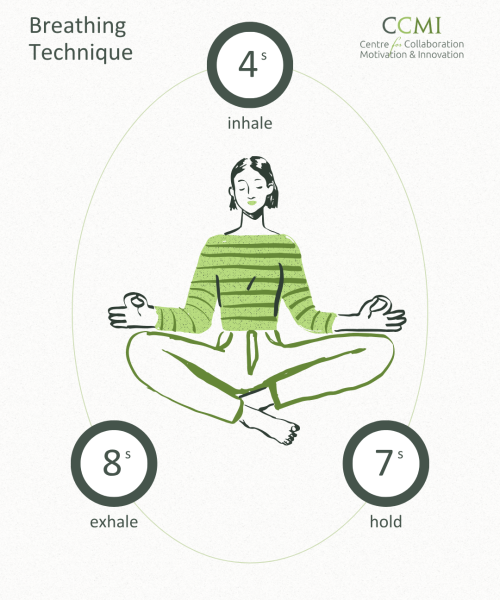
Try a “4-7-8” breathing pattern: inhale for 4 counts, hold for 7, and exhale slowly for 8. This lowers your stress. The person you’re speaking with can often sense your urgency or tension. A calm presence helps keep the conversation open.

Diagram of the 4-7-8 breathing technique with labeled steps: inhale for 4 seconds, hold for 7 seconds, and exhale for 8 seconds.

Show yourself compassion.
Reducing self-judgment helps us extend compassion to others. You might try:

  • Placing a hand over your heart
  • Saying to yourself:
    • “This might be a tough conversation.”
    • “Tough conversations are part of life.”
    • “May I be kind to myself in this moment.”
    • “May I give myself the compassion I need.”

Practices like these can help lower your physiological stress response before conversations. If you’re interested in strategies for reducing interpersonal stress and navigating conflict, you might find the Improving Interactions course especially helpful.

2. Use the Spirit of Motivational Interviewing

In the conversation, engage, focus, and explore using a Motivational Interviewing (MI) style. MI is based on partnership, acceptance, compassion, and evocation. It helps us face forward with the person and support their growth and change.

One of the core ideas in MI is that the person already has the capacity for change—they just need space and support to talk themselves into it. This is what we call “evoking change talk,” and it’s one of the skills we explore deeply in our MI Foundations course.

MI is a treasure-hunt, strengths-based approach. As Goethe once said:

“The way you see people is the way you treat them, and the way you treat them is what they become.”

MI-Based Communication Strategies

Here are some specific skills that support this approach:

  • Ask permission to explore the topic
  • Use bracketing questions to normalize behavior:
    “People approach drinking in a lot of ways—some do ‘x,’ ‘y,’ or ‘z.’ How would you describe your approach?”
  • Ask what they already know, what they’d like to know, and how you can be helpful
  • Ask permission to share a concern or to offer a menu of options
  • Support and affirm the efforts they’re already making
  • Approach with curiosity, not persuasion—they are the expert in their own life
  • Tie suggestions to their values, while respecting their autonomy:

If you’ve ever struggled with someone being silent, stuck, or saying “I don’t know,” there are MI-based techniques to navigate those moments with more ease. We explore these deeper skills in our MI Beyond mini-courses, which are designed for more advanced practice and reflection.

Keep in mind:

“It’s not immoral to try to make someone change. It is simply not possible.”

Stepping Into Tough Conversations With Confidence

Tough conversations are part of healthcare—and part of being human. But when emotions run high or time is short, it’s easy to fall into habits that create distance instead of connection. Maybe we give advice too quickly, push for change, or rush to fill the silence. Over Zoom, it can feel even harder: nonverbal cues are limited, and awkward pauses can feel more intense. These moments often leave both people feeling frustrated or unheard.

But it doesn’t have to be that way. With a bit of preparation and a Motivational Interviewing mindset, we can approach these conversations differently. That might mean pausing before jumping in, asking permission to share your thoughts, using open questions to understand their perspective, and recognizing their strengths. Even small shifts like these can help build connection, even through a screen.

When we guide with curiosity and respect, reluctance around change has a chance to drop. The other person feels heard, and the conversation becomes more collaborative. You don’t have to be perfect—just present and open to learning. If you’re ready to build your MI skills, CCMI offers training, practice, and feedback to help make tough conversations a little easier for you and the people you serve.


References:

  1. Gordon, T., Conversation Roadblocks. https://www.gordonmodel.com/work-roadblocks.php.
  2. Miller, WR. and Rollnick, S. 2023. Motivational Interviewing: Helping Others Change and Grow 4th ed. Guilford Press.
  3. Francis, N. et. al. When smokers are resistant to change: experimental analysis of the effect of patient resistance on practitioner behaviour. Addiction. 2005 Aug;100(8):1175-82.
  4. Adapted from Motivational Interviewing for Mental Health Practitioners-A Toolkit for Skills Enhancement. Frey, J. and Hall, A. (2021) https://www.amazon.com/gp/product/1683732014).
  5. Miller, WR and Rollnick, S. 2023.

About the author:

Ali Hall

MICA coder, Trainer


Ali Hall is a MINT Certified Trainer and internationally respected expert in Motivational Interviewing. She has led MI trainings across North America and Europe, and currently serves as Director Emeritus on the Motivational Interviewing Network of Trainers (MINT) Board. Ali is the co-author of Motivational Interviewing for Mental Health Clinicians and the upcoming What’s the Problem? An Advanced Guide to MI. With decades of experience coaching providers across healthcare, mental health, and justice systems, Ali brings deep expertise in helping professionals navigate tough conversations with skill and compassion.
Learn Motivational Interviewing with CCMI