Fixing Reflex Definition
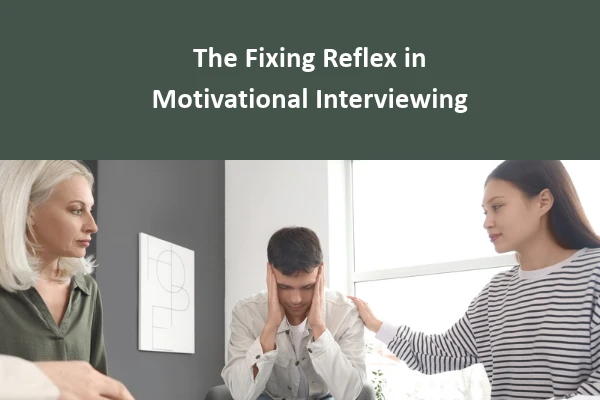
The fixing reflex—often called the “righting reflex”—is the automatic urge practitioners, coaches, and helpers have to fix a person’s problems, offer unsolicited advice, or convince them to change. When someone shares a struggle (such as breaking a bad habit or sticking to a routine), the natural instinct is to immediately jump in with solutions, logic, and persuasion.
Why the Fixing Reflex Backfires
When people are ambivalent about change, arguing for the “right” side triggers psychological reactance.
- It sends people in the opposite direction: When you tell someone why they should change, their natural self-defense mechanism leads them to argue why they can’t or won’t.
- It assigns the wrong roles: The helper ends up voicing all the arguments for change (change talk), leaving the client to voice all the reasons against it (sustain talk).
- It undermines autonomy: People rarely commit to changes forced upon them; they internalize and act on reasons for change that come from within.
How do you overcome the fixing reflex?
Motivational Interviewing (MI) is a collaborative communication style that shifts the helper’s role from an expert fixing a problem to a partner guiding a conversation. Instead of pushing solutions, MI uses specific core strategies to help people discover their own motivation:
- Resisting the Fixing Reflex: The practitioner consciously steps back from offering immediate advice or trying to “fix” the person.
- Eliciting Change Talk: Using OARS, the helper prompts the individual to express their own reasons, desires, and abilities to change.
- Supporting Autonomy in Behaviour Change: MI explicitly honors the individual’s freedom of choice, recognizing that lasting change only happens when the person owns the decision.
By swapping the urge to fix for empathetic curiosity, MI empowers individuals to talk themselves into changing—making the outcome far more durable and self-sustained.
What is OARS?
In MI, OARS are a core set of communication skills:
- Open-Ended Questions
- Affirmations
- Reflective Listening
- Summaries
For more information, download our OARS Cheat Sheet.
Taking the Next Step
Join us on November 25 as we discuss “The Fixing Reflex, Caught Live” at the next Practice Circle with trainer, Brittany Godin. Bring your own example or bring your own story and be ready to share with other MI practitioners and leaders. Sign up now as we have limited spots available!

Initial draft outline and post structure generated with the assistance of Gemini (Google), then reviewed, revised, and expanded by CCMI.