
Reducing Friction in Helping Conversations: An Introduction to OARS Part 1

Why Your Good Advice Might Be Backfiring

Navigating conversations around personal change can often feel like an uphill battle. Whether you are a clinician, counselor, coach, or leader, you have likely encountered moments where offering solid advice was met with pushback.

When people feel pressured or backed into a corner, their natural instinct is to dig in their heels or push back. In helping professions, this friction stalls progress, exhausts the practitioner, and strains trust.

The good news? This friction usually isn’t bad intent—it’s often a reaction to how the conversation is structured.

The “Righting Reflex”

Most helping professionals enter their fields out of a genuine desire to solve problems. When we see someone struggling, our natural instinct is to jump in with the solution. In Motivational Interviewing (MI), this is called the righting reflex.

However, when you tell someone what they should do before they are ready, it triggers natural psychological pushback. If an individual is on the fence about change, taking the side of change often forces them to argue for keeping things the same.


From Control to Partnership

Lowering friction starts with shifting the dynamic from directing to partnering. When clients feel safe, heard, and respected as autonomous decision-makers, they no longer need to spend energy defending their habits.

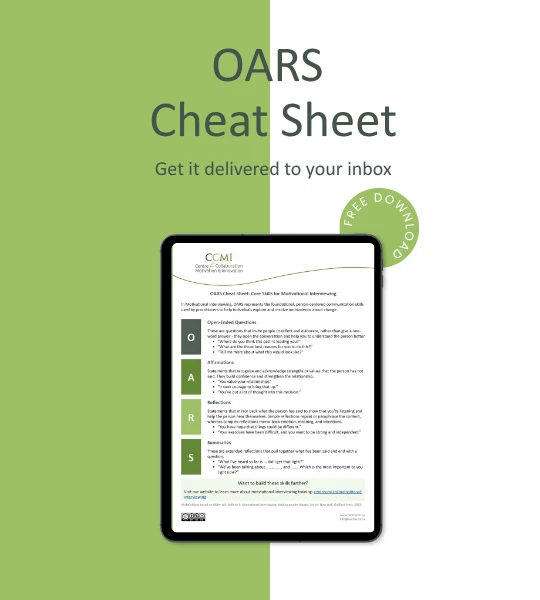
MI relies on a core set of person-centered communication skills known as OARS:

  • Open-Ended Questions
  • Affirmations
  • Reflective Listening
  • Summaries

While real skill takes practice, understanding these four elements is the first step toward smoother dialogue. Over the next three posts, we will explore how each piece of OARS helps open up conversation.

Want a quick reference for your desk?

Download our free OARS cheat sheet pdf for a handy look at descriptions of each OAR and examples.

    Initial draft outline and post structure generated with the assistance of Gemini (Google), then reviewed, revised, and expanded by CCMI.