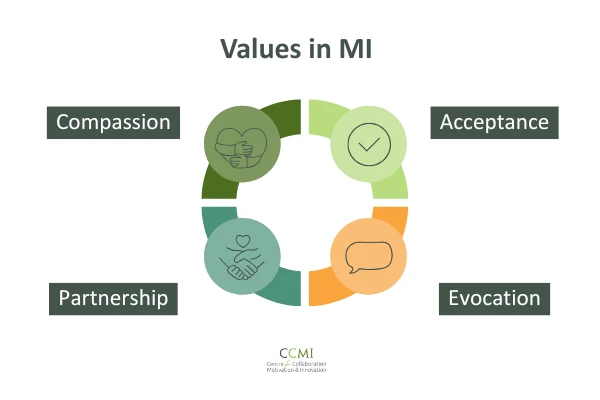
Because of these principles, MI is considered safe and appropriate across many populations and professions. Read more about when to use MI.
It’s also a well-researched and flexible approach. Studies show its effectiveness in fields such as mental health, addiction, social work, healthcare, education, probation, coaching, and more. Professionals consistently report that MI improves both engagement and outcomes.
Rooted in collaboration and empathy, MI is a valuable addition to any professional’s toolbox, particularly for those supporting people through change and growth. It is also flexible: MI can be used in brief encounters (like a 10-minute conversation) or integrated into long-term therapeutic relationships. It complements other evidence-based practices like CBT, DBT, and trauma-informed care, enhancing their impact through a more collaborative and client-centered lens.
In the latest edition of Motivational Interviewing: Helping People Change and Grow, authors William R. Miller and Stephen Rollnick emphasize that when MI is applied with fidelity to its spirit and principles, it generally leads to better client outcomes.
When MI Shines
MI is at its best when people are ambivalent about change. It helps them weigh options, clarify values, and move toward decisions that feel authentic and sustainable.
When MI Plays a Smaller Role
If someone is already highly motivated, you don’t need to “dig” for motivation. In those cases, MI skills shift naturally toward planning, goal-setting, and action, still respecting the person’s autonomy while supporting progress.
Not Just for Therapists
One of the biggest myths about MI is that it’s “just for counselors.” In reality, it’s used successfully by:
- Nurses and healthcare workers
- Educators
- Social workers
- Probation officers
- Peer supporters
- Coaches and mentors
In all these roles, MI helps professionals build trust, spark insight, and support decisions that stick.
Start Small, Right Where You Are
For those exploring MI in their professional roles, I encourage curiosity and experimentation. Your existing expertise puts you in the ideal position to recognize where MI can enhance your practice—whether that’s building stronger rapport, addressing ambivalence, or navigating complex change conversations.
Try exploring the Spirit of MI and practice simple micro-skills like Ask-Offer-Ask, a collaborative way to share information while respecting autonomy. Learn more about the Ask-Offer-Ask tool.
You could:
- Talk to colleagues about how MI might fit into your work
- Organize a book club around an MI resource
- Listen to the Talking to Change podcast for practical examples (Talking to Change on Spotify)
- Sign up for Practice and Feedback calls or join free monthly MI Practice and Feedback calls with CCMI
Even small steps can start to reshape conversations in powerful ways.
If you’d like to bring MI into your role, CCMI offers resources and training at every stage of learning.
Whether you’re supporting change in healthcare, education, social work, or another field, MI can help you create more meaningful, effective, and lasting impact. Our diverse range of programs is designed to help professionals build practical skills that lead to more effective engagement and lasting change. Let us help you integrate this powerful approach into your work.